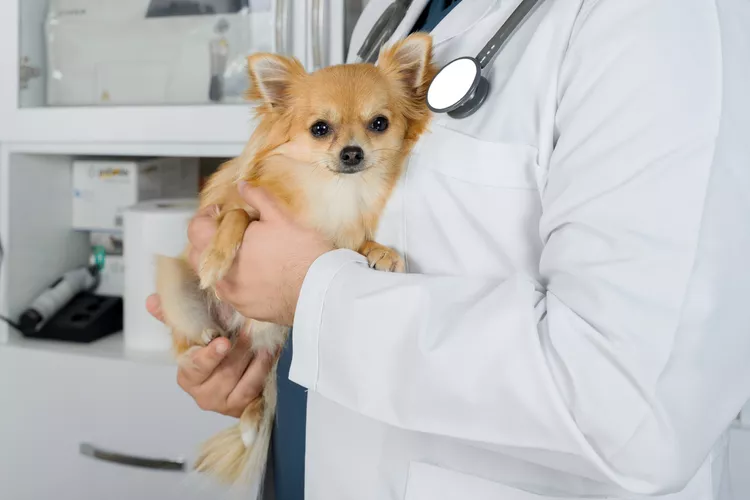
Legg-Calve-Perthes disease (LCPD) is an uncommon orthopedic disorder that can occur in dogs and humans. This congenital disease causes degeneration of the hip joint in young dogs, primarily small breeds. Animals affected by Legg-Calve-Perthes disease will ultimately need surgical treatment to maintain the use of the affected limb.
Legg-Calve-Perthes disease is an uncommon degenerative disease of the hip joint that begins with inadequate blood supply to the head of the femur. The femoral head is the "ball" part of the hip joint that sits in the pelvis and facilitates motion in the hip and rear limb.
Without the necessary blood supply, the bony tissues begin to disintegrate, leaving the femoral head deformed. The cartilage that once acted as a cushion between the ball and socket can no longer remain in place. The result is an ill-fitting joint that becomes very painful when moving the affected limb.
The name "Legg-Calve-Perthes" derives from the three separate orthopedic surgeons who discovered the disease in children in the early 20th century.
The symptoms of LCPD may be subtle at first but will progressively become more apparent as the degeneration worsens.
The signs of Legg-Calve-Perthes disease often begin with mild lameness that gets steadily worse over weeks to months. As the disease progresses, pain and stiffness will become more noticeable and muscle atrophy will develop. The dog will eventually stop bearing any weight on the affected limb due to pain and weakness. The typical onset of signs is between five and eight months of age.
Legg-Calve-Perthes is is typically a hereditary disease believed to be caused by:
The lack of blood flow causes necrosis of the femoral head, leading to the gradual disintegration of bone and cartilage in the hip joint.
Legg-Calve-Perthes primarily affects small breed dogs. Yorkshire Terriers are most often affected, but several other types of small dog breeds can develop the disease. In rare cases, the disease can be induced by an injury.
Similar signs may occur in dogs with other orthopedic conditions, such as hip dysplasia, so a definitive diagnosis is critical to determining the appropriate course of treatment. Your veterinarian will make a diagnosis based on history, examination, and x-rays.
If your dog has worsening lameness or any other signs of illness, schedule a veterinary check-up. The earlier a diagnosis is made, the better the chance of effective treatment.
In mild cases of Legg-Calve-Perthes disease, vets may treat conservatively with rest and pain medications such as anti-inflammatory drugs. Conservative therapy can help manage the lameness, but it will not stop the progression of the disease. If the signs do not progress, the dog may be able to live comfortably for years. It's important to keep the dog lean as excess weight will put too much strain on the joint.
Ultimately, surgery is the best treatment for Legg-Calve-Perthes disease. Your veterinarian will perform a femoral head and neck excision. This involves the removal of the disintegrating bone on the "ball" portion of the joint.
After surgery, rehabilitation therapy is necessary to help rebuild muscles that create a kind of "false joint" where the diseased bone used to be. Dogs that had early disease changes or mild signs may recover quickly. Dogs with muscle atrophy may need more time to rebuild muscle mass. Fortunately, in time, most dogs will make full recoveries and go on to live normal lives.
Aside from avoiding traumatic injuries, there is not much you can do to prevent the disease from developing in a dog you already have. However, you can avoid putting your dog through the worst of the symptoms by going to the vet soon after signs appear.
It is important not to breed a dog with Legg-Calve-Perthes disease to avoid passing on the gene. Instead, dogs with Legg-Calve-Perthes disease should be spayed or neutered.
Responsible breeders often test the hips of dog breeds predisposed to Legg-Calve-Perthes disease before breeding them. Testing can be done by submitting radiographs to the Orthopedic Foundation for Animals (OFA) where they can be reviewed for signs of LCPD and hip dysplasia.
If you are buying a small dog breed from a breeder, ask if the parents' hips have been examined by a vet, ideally via the OFA.
Legg-Calve-Perthes Disease in Dogs
Legg-Calve-Perthes is a congenital disorder affecting the hip joints of dogs—particularly small breeds. Learn the causes, treatment, and prevention.
Bloat in Dogs
Bloat, or gastric dilation volvulus (GDV), is an emergency that generally affects large breed dogs. Learn the causes, treatment, and prevention.
Anemia in Dogs
Anemia is a low red blood cell count. In dogs, it can indicate various problems—some of them serious. Learn the causes, treatment, and prevention.
Ear Yeast Infections in Dogs
Ear yeast infections in dogs are common, uncomfortable, smell bad, and dangerous if untreated. Learn the causes, treatment, and prevention.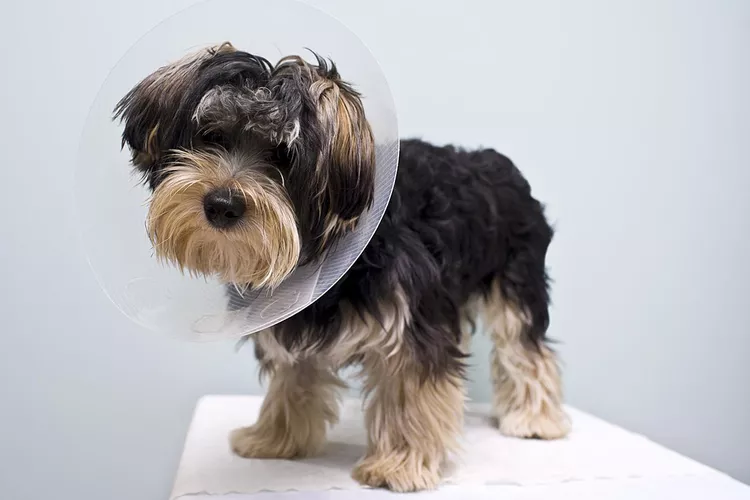
Neutering Your Dog Explained
What does it mean to neuter a dog? Learn about neutering or castration in dogs and why it is done. Find out what to expect when your dog is neutered.
Pyoderma in Dogs
Pyoderma is a skin infection commonly seen in puppies that may indicate a compromised immune system. Learn the causes, treatment, and prevention.
Dog Hiccups: How to Get Rid of Them
Dog hiccups in dogs are a fleeting nuisance in most cases, but sometimes they can mean something more. Learn what to watch for and find out how to get rid of dog hiccups.
5 Common Foods In Your Pantry That Are Not Safe For Your Pets
One potato chip is not going to hurt your pet, but there are other foods that can. Learn which to avoid and some safe foods that can be used as treats.
American Staffordshire Terrier: Breed Characteristics & Care
The American Staffordshire terrier is a type of pit bull with a friendly nature. Learn about the Am Staff's history, training, health, and more.
Greyhound: Dog Breed Characteristics & Care
Learn about the greyhound, the fastest dog breed in the world. They're also a loyal companion that's non-aggressive and good with children.
Berger Picard: Dog Breed Characteristics & Care
The Berger Picard is a French herding dog with a friendly smile and shaggy beard. Learn about its history, health, exercise needs, and more.
Tibetan Mastiff: Dog Breed Characteristics & Care
Learn about the Tibetan mastiff, an ancient guardian dog breed. This breed is known for their massive stature, flowing mane, and protective personality.
Can Dogs Eat Cantaloupe?
Find out if dogs can eat cantaloupe and if it's healthy. Learn how to feed dogs cantaloupe safely and what to watch out for.
Are Bones Safe for Dogs?
Are bones safe for dogs? Find out if it's really safe to give bones to dogs. Learn about the dangers of feeding bones to your dog.
Can Dogs Eat Kale?
Kale is rich in nutrients, but because it contains compounds that can harm dogs, veterinarians caution against making it a regular part of their diet.
Here’s How to Stop Your Dog from Jumping on You When Excited
Although it can be cute the first few times your dog jumps on you, it can quickly turn into a bad habit, especially if your pooch starts jumping on strangers. Here’s how to stop your dog from jumping on you when excited.
How to Stop Sudden Aggression in a Dog
It's not normal for a friendly dog to suddenly become aggressive. Sudden behavior changes may indicate a health problem and should not be ignored.
Different Meanings of a Dog's Wagging Tail
A dog wagging his tail is a common sight, but it may mean more than you think. Find out why dogs wag their tails and what canine tail wagging means.
Why Do Dogs Lick Other Dogs' Pee?
Sometimes a dog will lick another dog's urine. Find out why dogs lick other dogs' pee and learn how to stop it.
How to Stop Your Dog From Barking Excessively
All dogs bark, but excessive barking is a behavior problem. Learn how to help stop excessive barking and prevent it from happening all the time.