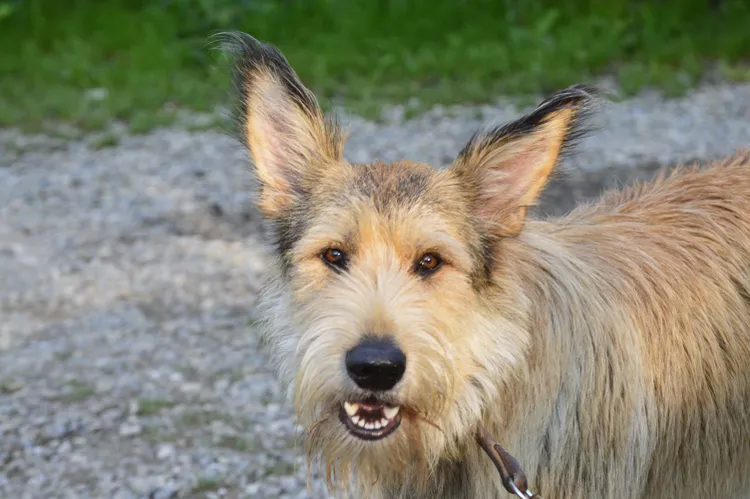
The Berger Picard is a medium-size herding dog breed from France that has a medium-length, wiry coat that forms its trademark shaggy beard, eyebrows, and mustache. Its erect ears are notably large and taper from a broad base to a slightly rounded tip. And its tail has a slight curve at the end. Overall, the breed is sturdy and muscular but not overly bulky. This allows it to move with agility and endurance in fields herding livestock.
Group: Herding
Height: 21.5 to 23.5 inches (female), 23.5 to 25.5 inches (male)
Weight: 50 to 70 pounds
Coat: Medium-length, wiry double coat
Coat Color: Brindle or fawn with/without white markings
Life Span: 12 to 13 years
Temperament: Energetic, alert, intelligent
Hypoallergenic: No
Origin: France
The Berger Picard generally has a bright and energetic temperament. This dog does best in an active household that will provide it with plenty of exercise and mental stimulation. High intelligence and trainability also shape the breed’s personality, though it can be stubborn about following commands at times.
The Berger Picard (pronounced: bare ZHAY pee CARR) is an ancient breed, and its origin is murky. Its ancestors are thought to have existed in France since the Middle Ages. And it might be a descendant of dogs brought to France by Central European Celts. It’s also a close relative of other French herding dogs, including the Briard and Beauceron, though it’s thought to be the oldest of these herders.
These dogs call the agricultural Picardy region of France home, where they were valued for their stamina and determination when herding. They were entered in France’s first dog show in 1863 in the same class as the Briard and Beauceron. It wasn’t until 1925 that the Berger Picard was recognized as a distinct breed in France.
World War I and II caused the breed’s numbers to dwindle, and it almost went extinct. Breeders have kept it alive, though it’s still rare. The American Kennel Club first recognized the Berger Picard in 2015. And the breed even got a popularity boost as the star of the 2005 movie "Because of Winn-Dixie."
Plan to spend ample time exercising your Berger Picard. Fortunately, this breed has fairly low-maintenance grooming needs. But it should receive consistent training and socialization starting from a young age.
Aim for at least two hours of exercise per day for your Berger Picard. Ideal activities include long walks, games of fetch, running, cycling, swimming, and hiking. Dog sports, including herding and agility, also are great ways to provide mental and physical challenges. And puzzle toys can give your dog some mental stimulation.
A bored Berger Picard that doesn’t have an outlet for its energy might become destructive, so make sure you’re able to dedicate enough time each day to exercise your dog.
The Berger Picard has a soft, insulating undercoat paired with a waterproof, wiry outer coat. It doesn’t need trimming, as this can damage the coat’s texture. And you typically only have to brush a few times a month to remove any loose fur and dirt. The coat is not prone to matting. However, expect periods of higher shedding often in the spring and fall, during which you should brush at least a few times per week to keep up with the loose fur.
The coat also stays relatively clean on its own, so in general you’ll only need to bathe your dog when it gets dirty. But check your dog’s ears at least weekly for wax buildup, dirt, and other abnormalities. Plus, trim its nails roughly once a month, and aim to brush its teeth every day.
Berger Picards are smart and can pick up on training commands relatively quickly. Start training and socializing ideally when your dog is a puppy to instill good manners and prevent bad habits.
Always use positive-reinforcement training methods, such as praise and treats. This breed can be sensitive to harsh corrections, shutting down and refusing to learn. Also, aim to keep your training sessions fun and varied to hold your dog’s interest. The breed does have a stubborn streak and can get bored with excessive repetition.
Furthermore, if not adequately socialized from a young age, some Berger Picards might be skittish around new people and places. So start introducing your dog to different people, other dogs, and various locations as early and often as possible. Keep interactions positive using treats and praise, and stop if your dog seems overwhelmed.
The Berger Picard is typically a very healthy dog breed throughout its life. But it can be prone to some hereditary health issues, including:
Fresh water should always be available for your dog. And feed it a quality, nutritionally balanced diet, typically via two measured meals per day. Run both the type of food and the amount by your vet to ensure that you’re meeting your dog’s individual needs. For instance, if your Berger Picard lives a very active lifestyle, its nutrition needs might be higher. But be mindful of treats and other extra food to avoid overfeeding.
The Berger Picard is extremely rare, so it might be difficult to find at both rescue groups and breeders. But it's still worth checking animal shelters and rescues to see whether there's a dog in need of a home. Get your name on a breed wait list if possible. For breeders, you might have to wait some time and travel a great distance to find a puppy. Expect to pay around $2,000 to $3,000 on average for a puppy from a responsible breeder.
For further information to connect you with a Berger Picard, check out:
Adventurous and athletic
Typically a healthy breed
Easy-care coat
Needs lots of exercise
Can be stubborn about training
Might be destructive when bored
Do thorough research before bringing home a Berger Picard to make sure the breed is right for your lifestyle. Talk to Berger Picard owners, rescue groups, reputable breeders, and veterinary professionals. Spend some time around Berger Picards too if possible.
If you’re interested in similar breeds, check out:
There’s a whole world of potential dog breeds out there—with a little research, you can find the right one to bring home!
Well-trained and socialized Berger Picards are moderately tolerant of kids in general. They can be a good fit for older children, but they might be too energetic around young kids.
Berger Picards generally are friendly and devoted to their family. They can be wary of strangers. But with proper training and socialization, this typically does not translate into aggression.
Berger Picards do best in a home with a secure yard in which they can run freely. They often are too active for apartment living and might become destructive if they don’t have an outlet for their energy.

Legg-Calve-Perthes Disease in Dogs
Legg-Calve-Perthes is a congenital disorder affecting the hip joints of dogs—particularly small breeds. Learn the causes, treatment, and prevention.
Bloat in Dogs
Bloat, or gastric dilation volvulus (GDV), is an emergency that generally affects large breed dogs. Learn the causes, treatment, and prevention.
Anemia in Dogs
Anemia is a low red blood cell count. In dogs, it can indicate various problems—some of them serious. Learn the causes, treatment, and prevention.
Ear Yeast Infections in Dogs
Ear yeast infections in dogs are common, uncomfortable, smell bad, and dangerous if untreated. Learn the causes, treatment, and prevention.
Neutering Your Dog Explained
What does it mean to neuter a dog? Learn about neutering or castration in dogs and why it is done. Find out what to expect when your dog is neutered.
Pyoderma in Dogs
Pyoderma is a skin infection commonly seen in puppies that may indicate a compromised immune system. Learn the causes, treatment, and prevention.
Dog Hiccups: How to Get Rid of Them
Dog hiccups in dogs are a fleeting nuisance in most cases, but sometimes they can mean something more. Learn what to watch for and find out how to get rid of dog hiccups.
5 Common Foods In Your Pantry That Are Not Safe For Your Pets
One potato chip is not going to hurt your pet, but there are other foods that can. Learn which to avoid and some safe foods that can be used as treats.
American Staffordshire Terrier: Breed Characteristics & Care
The American Staffordshire terrier is a type of pit bull with a friendly nature. Learn about the Am Staff's history, training, health, and more.
Greyhound: Dog Breed Characteristics & Care
Learn about the greyhound, the fastest dog breed in the world. They're also a loyal companion that's non-aggressive and good with children.
Berger Picard: Dog Breed Characteristics & Care
The Berger Picard is a French herding dog with a friendly smile and shaggy beard. Learn about its history, health, exercise needs, and more.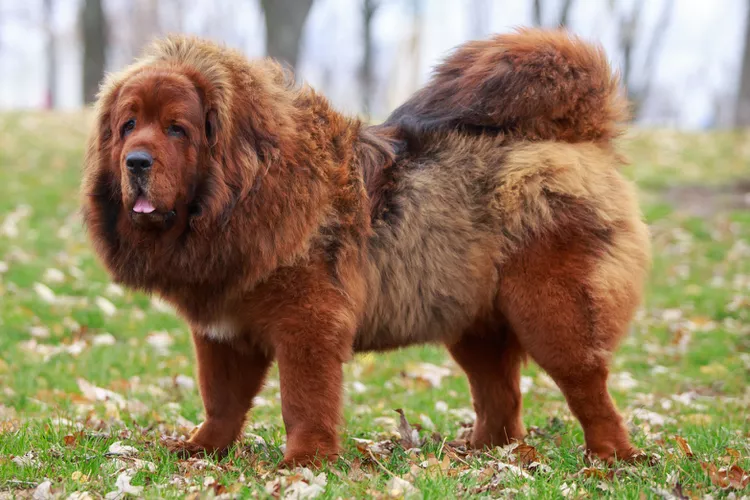
Tibetan Mastiff: Dog Breed Characteristics & Care
Learn about the Tibetan mastiff, an ancient guardian dog breed. This breed is known for their massive stature, flowing mane, and protective personality.
Can Dogs Eat Cantaloupe?
Find out if dogs can eat cantaloupe and if it's healthy. Learn how to feed dogs cantaloupe safely and what to watch out for.
Are Bones Safe for Dogs?
Are bones safe for dogs? Find out if it's really safe to give bones to dogs. Learn about the dangers of feeding bones to your dog.
Can Dogs Eat Kale?
Kale is rich in nutrients, but because it contains compounds that can harm dogs, veterinarians caution against making it a regular part of their diet.
Here’s How to Stop Your Dog from Jumping on You When Excited
Although it can be cute the first few times your dog jumps on you, it can quickly turn into a bad habit, especially if your pooch starts jumping on strangers. Here’s how to stop your dog from jumping on you when excited.
How to Stop Sudden Aggression in a Dog
It's not normal for a friendly dog to suddenly become aggressive. Sudden behavior changes may indicate a health problem and should not be ignored.
Different Meanings of a Dog's Wagging Tail
A dog wagging his tail is a common sight, but it may mean more than you think. Find out why dogs wag their tails and what canine tail wagging means.
Why Do Dogs Lick Other Dogs' Pee?
Sometimes a dog will lick another dog's urine. Find out why dogs lick other dogs' pee and learn how to stop it.
How to Stop Your Dog From Barking Excessively
All dogs bark, but excessive barking is a behavior problem. Learn how to help stop excessive barking and prevent it from happening all the time.