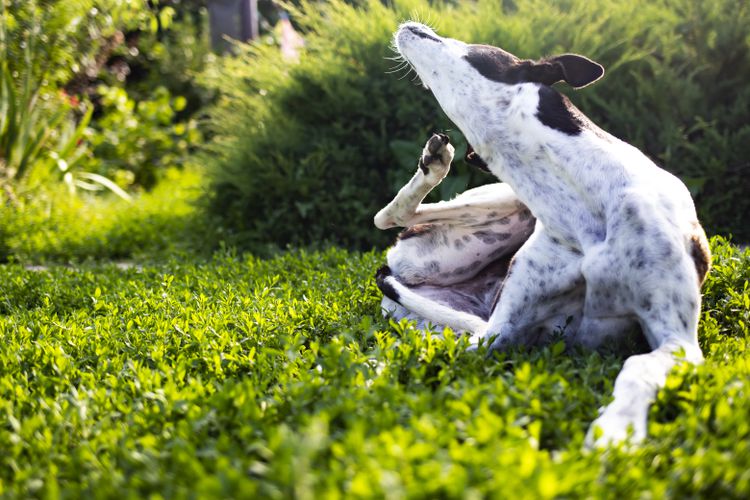
Chiggers are tiny mites that can affect dogs, people, and other animals. They live on the surface of the skin and feed on skin cells. Unfortunately, their presence causes itching and skin irritation. Here's how dogs get chiggers and how they can be treated and prevented.
Chiggers are the larvae of trombiculid mites found in wooded areas of the U.S. as well as around the world. The larvae live on the skin and inject saliva into the skin to dissolve tissue and create a pool of body fluids to drink from. This causes an extremely itchy skin infestation in dogs, humans, and other affected animals.
Chiggers go by many other names including harvest mites, red bugs, itch mites, heel bugs, black soil itch mites, duck-shooters itch mites, bush mites, berry bugs, and scrub mites, and they all belong to the family Trombiculidae.
Dogs with chiggers show several signs of skin problems, including:
Dogs usually come into contact with chiggers when walking through tall grasses and other vegetation. The mites attach and remain at the points of contact—most commonly on the paws, legs, belly, head, ears, and area under the tail. They are most active in the late summer and fall but may be present all year in warmer climates.
Dogs are often infected when running off-leash. Working dogs, such as hunting dogs and dogs spending most of their time living outdoors, are more commonly affected. Humans and many other animals can also become infected with chiggers directly from the environment, but not from other hosts such as dogs. This most often happens when a human caregiver also walks in the same areas as their dog, or they are both in an infested environment and become infected.
Veterinarians often diagnose chiggers based on a skin scrape, where a sterile blade is used to gently collect skin cells and other debris. The vet will examine them under a microscope to look for parasites and other abnormalities. In some cases, the mites may not be seen on a skin scrape and the vet will recommend additional tests, such as a biopsy.
It's important to have your veterinarian diagnose chiggers before you begin any treatment. Many other skin conditions in dogs such as mange, flea allergies, fungal infections, atopy, or autoimmune diseases can have similar signs but require very different treatments.
Listed below are some common treatments your vet may suggest:
If your vet diagnoses your pup with chiggers, she will likely prescribe a specific medication to kill the mites. Usually the medications used to kill chiggers are topical products containing fipronil and/or permethrin, some of which may be purchased over-the-counter.
In many cases, dogs may also need antibiotics if they have a secondary skin infection. They may prescribe steroids or other anti-inflammatories if the dog has severe skin inflammation. Follow your veterinarian's directions exactly and finish all courses of medications as directed to avoid complications.
Soothing baths may also help to control the itch while you wait for the medication to take effect. Be sure to use water that is lukewarm and not too hot to prevent further drying of the skin. Use a gentle itch-relieving shampoo such as an oatmeal-based product and/or one containing phytosphingosine, which is a moisturizing ingredient that may also reduce inflammation and have antimicrobial properties. This can help strengthen the skin’s protective barrier. Your vet may recommend a medicated shampoo as well.
It's also important to prevent re-infection for your pup. This means keeping your pup away from areas where chiggers live and where it may have become infected in the first place. There are a few ways to prevent chiggers from affecting your dog:

Legg-Calve-Perthes Disease in Dogs
Legg-Calve-Perthes is a congenital disorder affecting the hip joints of dogs—particularly small breeds. Learn the causes, treatment, and prevention.
Bloat in Dogs
Bloat, or gastric dilation volvulus (GDV), is an emergency that generally affects large breed dogs. Learn the causes, treatment, and prevention.
Anemia in Dogs
Anemia is a low red blood cell count. In dogs, it can indicate various problems—some of them serious. Learn the causes, treatment, and prevention.
Ear Yeast Infections in Dogs
Ear yeast infections in dogs are common, uncomfortable, smell bad, and dangerous if untreated. Learn the causes, treatment, and prevention.
Neutering Your Dog Explained
What does it mean to neuter a dog? Learn about neutering or castration in dogs and why it is done. Find out what to expect when your dog is neutered.
Pyoderma in Dogs
Pyoderma is a skin infection commonly seen in puppies that may indicate a compromised immune system. Learn the causes, treatment, and prevention.
Dog Hiccups: How to Get Rid of Them
Dog hiccups in dogs are a fleeting nuisance in most cases, but sometimes they can mean something more. Learn what to watch for and find out how to get rid of dog hiccups.
5 Common Foods In Your Pantry That Are Not Safe For Your Pets
One potato chip is not going to hurt your pet, but there are other foods that can. Learn which to avoid and some safe foods that can be used as treats.
American Staffordshire Terrier: Breed Characteristics & Care
The American Staffordshire terrier is a type of pit bull with a friendly nature. Learn about the Am Staff's history, training, health, and more.
Greyhound: Dog Breed Characteristics & Care
Learn about the greyhound, the fastest dog breed in the world. They're also a loyal companion that's non-aggressive and good with children.
Berger Picard: Dog Breed Characteristics & Care
The Berger Picard is a French herding dog with a friendly smile and shaggy beard. Learn about its history, health, exercise needs, and more.
Tibetan Mastiff: Dog Breed Characteristics & Care
Learn about the Tibetan mastiff, an ancient guardian dog breed. This breed is known for their massive stature, flowing mane, and protective personality.
Can Dogs Eat Cantaloupe?
Find out if dogs can eat cantaloupe and if it's healthy. Learn how to feed dogs cantaloupe safely and what to watch out for.
Are Bones Safe for Dogs?
Are bones safe for dogs? Find out if it's really safe to give bones to dogs. Learn about the dangers of feeding bones to your dog.
Can Dogs Eat Kale?
Kale is rich in nutrients, but because it contains compounds that can harm dogs, veterinarians caution against making it a regular part of their diet.
Here’s How to Stop Your Dog from Jumping on You When Excited
Although it can be cute the first few times your dog jumps on you, it can quickly turn into a bad habit, especially if your pooch starts jumping on strangers. Here’s how to stop your dog from jumping on you when excited.
How to Stop Sudden Aggression in a Dog
It's not normal for a friendly dog to suddenly become aggressive. Sudden behavior changes may indicate a health problem and should not be ignored.
Different Meanings of a Dog's Wagging Tail
A dog wagging his tail is a common sight, but it may mean more than you think. Find out why dogs wag their tails and what canine tail wagging means.
Why Do Dogs Lick Other Dogs' Pee?
Sometimes a dog will lick another dog's urine. Find out why dogs lick other dogs' pee and learn how to stop it.
How to Stop Your Dog From Barking Excessively
All dogs bark, but excessive barking is a behavior problem. Learn how to help stop excessive barking and prevent it from happening all the time.