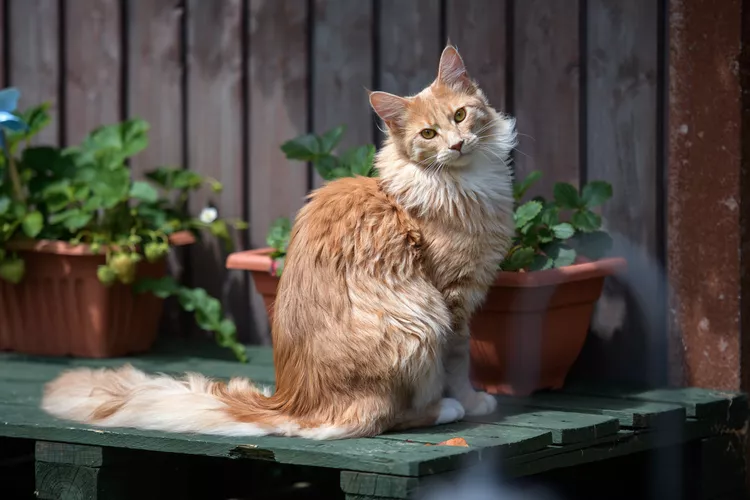
- 01 of 15
American Shorthair
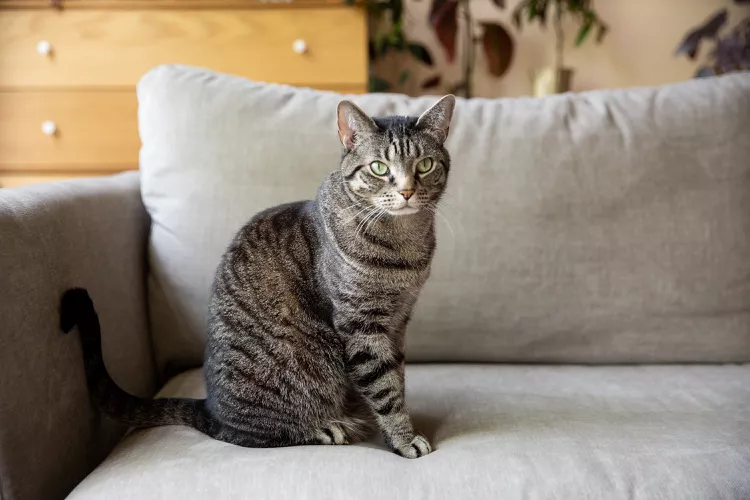
The American shorthair has a pedigree stretching back to early U.S. history. This breed’s claim to fame is its voyage on the Mayflower. It’s believed pilgrims brought skilled feline mousers from Europe to keep rodents under control on the transatlantic voyage. Once settled in their new homeland, these early ancestors of the breed continued to prowl for rodents and eventually came to be known as the American shorthair. The breed received official recognition in 1966.
Breed Overview
Height: 8 to 10 inches
Weight: 10 to 15 pounds
Physical Characteristics: Athletic build; short, dense coat; various colors and patterns
- 02 of 15
American Curl
One glance at the backward-curled ears of this American cat breed, and you’ll understand how it got its name. These cats have a natural genetic mutation that results in the peculiar ear shape. The mutation was first discovered in cats of the early 1980s, and efforts quickly got underway to selectively breed for the trait. Unlike some other gene mutations, this one is dominant, meaning just one parent needs to have the gene for the trait to appear.
Breed Overview
Height: 5 to 8 inches
Weight: Up to 6 pounds
Physical Characteristics: Prominent ears; alert expression; short or long coat in many different colors, including black, white, fawn, blue, and more
- 03 of 15
Bengal
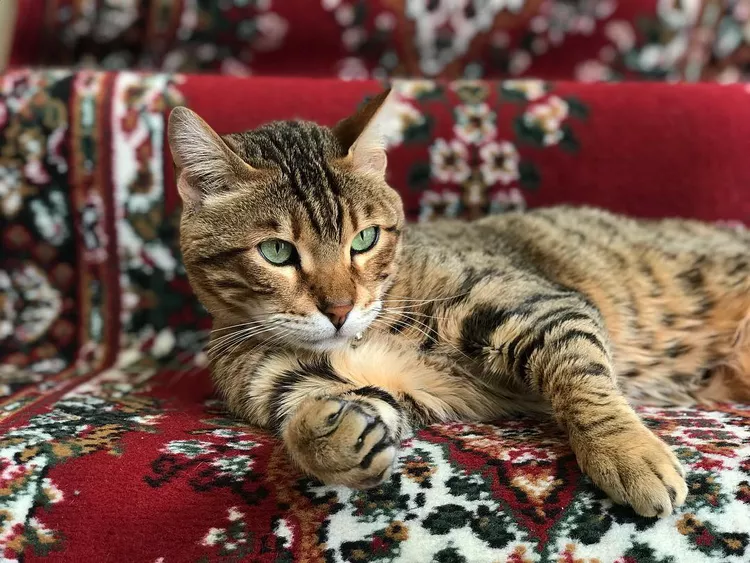
The Bengal cat was developed in the U.S. in the 1970s. The breed got its start when an African leopard cat was successfully crossed with a domestic cat. The Abyssinian, American shorthair, and Egyptian Mau were also early contributors to the breeding program. Third-generation Bengals generally exhibit the personality of a domestic house cat, but they retain the striking spotting and marbling of a leopard.
Breed Overview
Height: 8 to 10 inches
Weight: 15 pounds
Physical Characteristics: Sleek, muscular body; striped and spotted coat
- 04 of 15
Exotic Shorthair
The exotic shorthair looks like a Persian cat with a haircut. This American cat was deliberately bred to have a short, plush coat with the distinctive round, flat face of the Persian. Often referred to as the "lazy man’s Persian," these cats share similar traits and are held to the same breed standards. The biggest difference is that exotic shorthairs are easier to groom.
Breed Overview
Height: 10 to 12 inches
Weight: 10 to 12 pounds
Physical Characteristics: Short legs; rounded body; short nose
Continue to 5 of 15 below - 05 of 15
Maine Coon
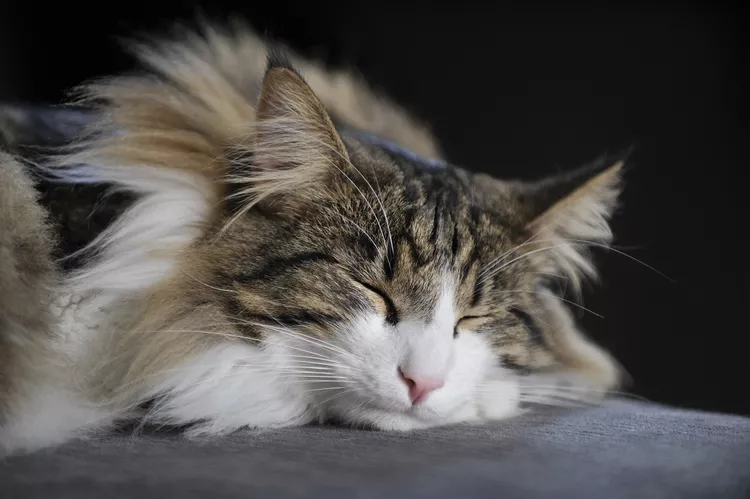
The Maine coon is known as a "gentle giant" of the cat world due to its large size and easygoing nature. The modern history of this American cat breed begins in Maine. The cat's medium-length fur with a prominent ruff on the chest and tufts of fur on the ears and feet no doubt helped it handle the harsh Northeastern weather. Still, these cats are surprisingly easy keepers and only require weekly grooming.
Breed Overview
Height: 10 to 16 inches
Weight: 10 to 25 pounds
Physical Characteristics: Muscular build; thick, heavy coat; comes in a range of colors and patterns
- 06 of 15
Ragdoll
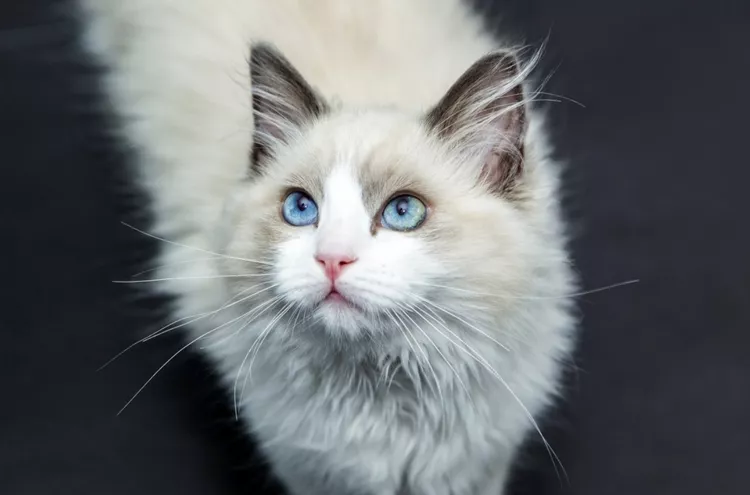
The ragdoll is a California original; this American cat breed was developed on the West Coast in the 1960s. Today, these cats are known for their friendly and affectionate nature. Unlike many cat breeds that tend to be selective about when and how they're held, the ragdoll generally seems to enjoy any type of human interaction and has a tendency to go limp when carried.
Breed Overview
Height: 9 to 11 inches
Weight: 8 to 20 pounds
Physical Characteristics: Blue eyes; semi-longhaired coat; various colors and patterns
- 07 of 15
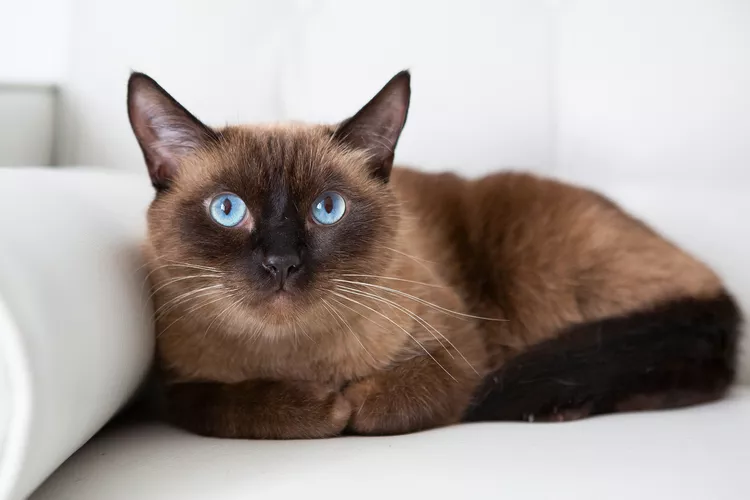
Balinese
The Balinese shares many traits with the Siamese, but a luxurious longhaired coat sets this breed apart. Originally occurring as a natural gene mutation in a litter of Siamese cats, the Balinese was initially referred to as a longhaired Siamese. However, enthusiasts of the breed worked to selectively develop cats with the traits that today define this American cat breed.
Breed Overview
Height: 6 to 7 inches
Weight: 8 to 12 pounds
Physical Characteristics: Wedge-shaped head; slender body with long hair and tail plume; blue eyes
- 08 of 15
Selkirk Rex
The Selkirk Rex is another American cat breed that came about from a naturally occurring genetic mutation for its trademark curly coat. The breed has been developed with the help of Persian, British shorthair, and exotic shorthair crosses. These cats tend to be very sweet and mellow, and they get along well with people and even other pets.
Breed Overview
Height: 9 to 11 inches
Weight: 11 to 16 pounds (male); 6 to 12 pounds (female)
Physical Characteristics: Medium build; short or long fur; fur is thick and loosely curled
Continue to 9 of 15 below - 09 of 15
Bombay
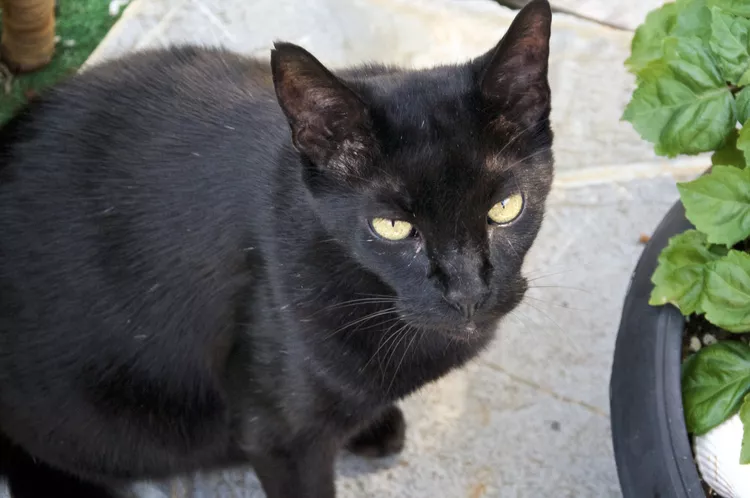
This American cat breed was intentionally bred to look like a small black panther, but fortunately it proves to be a much more affectionate and sociable house companion. Originally developed in Kentucky in the 1970s, the Bombay came from breeding stock of black American shorthair cats and sable-colored Burmese cats. Everything about today's Bombay cat is black—its fur, nose, and paw pads—with the exception of its eyes, which are gleaming gold or copper.
Breed Overview
Height: 8 to 10 inches
Weight: 8 to 15 pounds
Physical Characteristics: Muscular body; rounded head; black, shiny coat
- 10 of 15
Pixie-Bob
The Pixie-bob is a smaller look-alike version of a wild bobcat. The breed is said to have originated from crossing a wild bobcat with a domesticated cat. While it might look a bit wild and is larger than the average house cat, the Pixie-bob is known to be both playful and affectionate.
Breed Overview
Height: 10 to 12 inches
Weight: 11 to 22 pounds
Physical Characteristics: Bobcat-like appearance; shorthaired to shaggy coat; various tail lengths
- 11 of 15
LaPerm
A soft coat of curls characterizes LaPerm cats. The breed originated from barn cats breeding in Oregon in the 1980s. That introduced a wide range of coat and eye colors, giving the breed variety and beauty. Although the cat's coat is somewhat long, it doesn’t shed much and requires a quick comb a few times a week to reduce mats and tangles.
Breed Overview
Height: 10 to 12 inches
Weight: 6 to 12 pounds
Physical Characteristics: Sturdy build; tightly curled hair around the neck, ears, and tail; can come in all colors and patterns but are commonly seen in tortoiseshell, calico, and tabby
- 12 of 15
American Wirehair
Closely related to the American shorthair, this cat breed was originally developed in New York. Today, the American wirehair remains rare but stands out for its coarse, wiry coat and whiskers. The gene responsible for this cat breed’s unique coat is a spontaneous dominant mutation. The breed also has a slightly different facial structure than American shorthairs.
Breed Overview
Height: 8 to 10 inches
Weight: 3 to 8 pounds
Physical Characteristics: Medium-short coat that is straight with a wiry but soft texture; round face; high cheekbones
Continue to 13 of 15 below - 13 of 15
American Bobtail
The American bobtail stands out for its tail—or lack thereof. Instead of the long, flicking tail familiar to most cat lovers, this American cat breed has a tail that is significantly shorter. It can be straight, curved, or kinked. Bred from a wide range of cat breeds, the American bobtail has a deep pool of genetic diversity and isn’t plagued with many common health problems.
Breed Overview
Height: 9 to 10 inches
Weight: 7 to 16 pounds
Physical Characteristics: Shortened tail that may be straight or curved; short to long coat that is typically shaggy; comes in many colors and patterns
- 14 of 15
Ocicat
This American cat breed is another example of domestic cats intentionally bred to resemble a wild cat. The Ocicat’s spots, stripes, and large expressive eyes bring to mind the ocelot. Originally an unintentional creation, the early version of the Ocicat was meant to be a Siamese cat with the coloring of the Abyssinian breed. Several crosses of this type produced a cat with both stripes and spots that resemble an ocelot.
Breed Overview
Height: 9 to 11 inches
Weight: 9 to 15 pounds (male); 6 to 9 pounds (female)
Physical Characteristics: Athletic build; long tail; short-haired tabby coat with various shades of spotting including blue, brown, lavender, fawn, and silver
- 15 of 15
Lykoi
The Lykoi has often drawn comparisons to a creature of myths: the werewolf. Its sparse coat and bright copper eyes make it easy to see how the breed, which hails from Vonore, Tennessee, is often called "the werewolf cat." The breed’s unique appearance resulted from a natural genetic mutation. Known to be playful and intelligent, these cats make excellent pets.
Breed Overview
Height: 8 to 10 inches
Weight: 4 to 7 pounds
Physical Characteristics: Partially hairless (sparse on face and legs); short tail; black-gray coat