
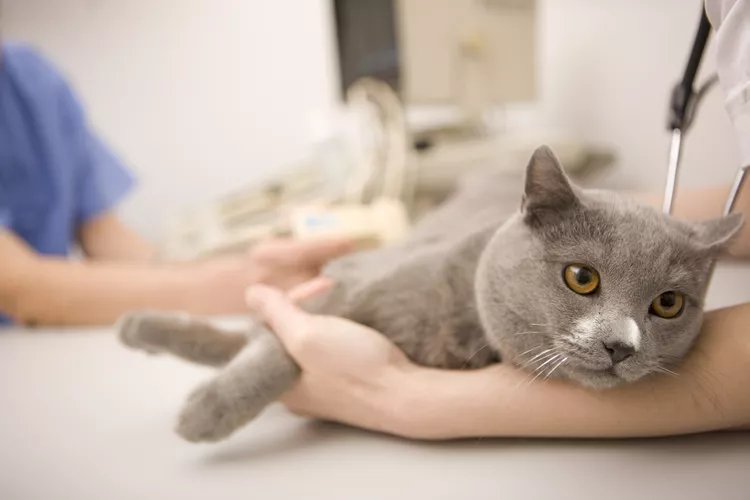
Expressing your cat's anal glands may need to be a routine practice especially if your veterinarian has recommended regular anal gland expressions for your cat. You can learn to perform the procedure at home (assuming your cat is cooperative) and save some money.
A cat's anal glands naturally express a scent-marking liquid when they defecate. Sometimes an impaction may occur that prevents the fluid from escaping and may need your help with their anal glands. This impaction can be painful for your cat and lead to further problems like infections.
It's not the most enjoyable experience for you or the cat, and it can be messy, so there's no need to be embarrassed if you decide to leave this job to the professionals.
Before You Begin
It is important to understand the function of anal glands (also known as anal sacs) in cats. They are small structures located on both sides of the anus at roughly the 5 and 7 o'clock positions. Tiny ducts beneath the skin lead to openings next to the anus.
In cats, the glands' purpose is to leave a powerful territorial scent message via anal sac secretions that are applied to feces. A cat's healthy, firm feces "milk" the anal glands while passing through the anus. Cats may also spontaneously express anal sac secretions when excited or frightened.
Unfortunately, some health problems prevent this normal process from occurring. For example, obesity, chronically soft stools due to a poor diet, or gastrointestinal disorders may hinder the normal stimulus for anal gland expression. Weight loss and/or increasing fecal bulk and firmness (with a high-fiber diet or supplement, for example) may help, but manually expressing the gland can also be necessary to prevent anal gland problems such as impaction and infection.
How to Tell If Your Cat Needs Their Glands Expressed
Signs that you may need to express the glands manually include redness in the area and the cat scooting around or licking excessively.
Do not express your cat's anal glands without first consulting with your veterinarian. Problems such as anal gland infections and tumors require additional treatment.
What You Need
- Sturdy surface for the cat to stand on: A bathroom countertop would be excellent. You may want to line it with a layer of newspapers or towels first.
- Surgical gloves: You'll want to avoid getting the extremely smelly secretions on your hands.
- Moist wipes: For cleaning the anal area after expressing the anal glands. Damp paper towels will also work quite well.
- Kitty treats: Handy for ensuring your cat's cooperation and as a reward when you are finished.
Get a Helping Hand
You will likely need the help of another person to hold the cat while you perform the procedure. Have them hold the cat from the front (so it's facing away from you) with a reassuring touch.
Be sure that both of you remain calm and talk softly to your cat to reduce as much stress as possible. Offering treats as a distraction will help as well.
Locate the Anal Glands
Hold the cat's tail up. Locate the anal glands at roughly the 5 and 7 o'clock positions on either side of the anal opening. When full, they tend to feel like soft but firm peas or jelly beans.
Press Gently
Using either the index fingers of both hands or the thumb and index finger of one hand, place your fingers on the outside bottom of the sacs. Gently press inward and upward at the same time until the gland releases its contents and is empty. Repeat on the other side.
Clean Up
Clean the anal area with moist wipes or a damp paper towel. Give the cat a final treat and release it. Remove the surgical gloves, wrap them up along with the used moist wipes in the newspaper, and discard them. Give your partner a high-five and celebrate!
Preventing Problems With Your Cat During Anal Gland Expression
If you were not successful, make an appointment with your veterinarian to have them express your cat's anal glands. When you go into the office, ask the vet to coach you on the procedure so you can try again the next time it's needed. Be sure to get a few tips on restraining and distracting your cat as well.
Your veterinarian can also check for evidence of anal gland disease, including:
- Impaction: Normal anal sac (gland) secretion is a yellowish color and oily in appearance and texture. If not regularly expressed, the secretion thickens to a mush-like consistency, and may ultimately become very thick, hard, and grainy.
- Infection leading to abscess: Infected anal glands become swollen, painful, and red. If caught in time, the infection may be treated with antibiotics, however, abscesses must be drained by a veterinarian. Warm compresses may also help reduce the pain and swelling.
- Tumors: Anal gland tumors are also possible.
Cats with recurrent anal sac impactions or inflammation may be treated with surgical removal of the anal sac. Anal gland tumors, which are not common, will also be treated by removal of the whole sac.