
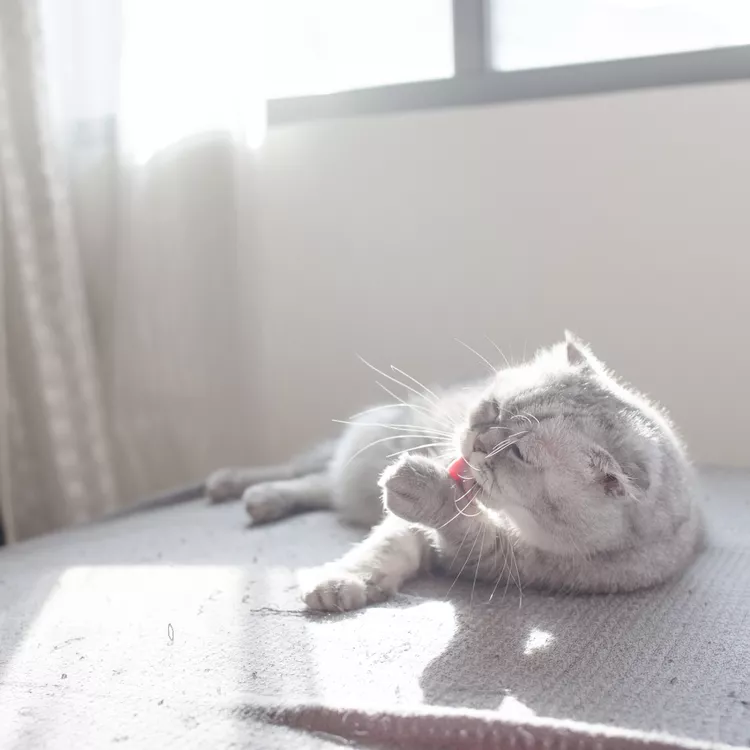
Cats are fastidious animals, and they groom themselves several times a day. Yet you may have always wondered why cats lick their front feet after every meal. Even though they have not touched any food with their feet, all cats tend to do this. Food-related grooming may be a throwback to a cat's live prey hunting rituals in the wild.
Grooming the Head and Face After Eating
Cats may groom themselves for multiple reasons. Cat food, especially if wet, can splatter tiny particles and leave oils and food smells around the mouth, in the whiskers, and on the face or even the front legs. Keeping clean is also important for many cats and so to a cat, these food particles do not belong there and must be removed!
Cats clean themselves with their tongues, which have rough surfaces that can comb"and separate each hair while also distributing saliva to loosen particles of dirt. Although cats are extremely flexible, there are some areas of the body that their tongues simply cannot reach, including their ears, upper face, the back of the head, and the area around the mouth and jaw. For these locations, they use a front paw as a "washcloth."
They first dampen the paw by licking it, and then the cat will use that same paw to wipe the moisture from the paw onto the area to be cleaned. They will perform this ablution ritual several times in each area to be cleaned. Finally, when they are finished, they will clean the foot itself that collected the dirt.
The next time your cat eats, watch him closely and you will witness the entire operation. Washing up after eating is another good habit we humans can learn from cats!
Excessive Grooming Anytime Around a Meal
Cat owners know that this grooming procedure is emotionally calming and settling for any cat. But just as we humans can have a mild stomach upset after eating dessert or food that is slightly irritating or allergy-inducing, cats can react in much the same way. If your pet has excessive grooming around mealtime, take a video and consult with your vet. Sometimes excessive grooming can indicate discomfort.
Many cats with food allergies will have vomiting throughout their life. However, vomiting in a cat is not normal unless it is an occasional hairball. While there are several hairball remedies available, vomiting should always be checked out by a vet.
Remember, some grooming is normal for cats. You can also watch for other behaviors after the cat eats. Does he seem out of energy? Does she want to go right to sleep? Like all hunting species, cats in the wild were meant to eat hunted prey and the occasional fresh plant matter for vitamins, fiber, and minerals. Discussing diets with your cat's vet is highly recommended and remembering to pay attention to any signs of discomfort or illness will help you give your furry friend the best care.